

Airports and metro stations depend on controlled entry systems to manage large volumes of passengers every day. A well-designed flap barrier turnstile ensures that movement remains smooth while maintaining strict safety standards. Authorities worldwide invest in reliable systems that balance speed, durability, and user convenience.
Modern transit hubs also require flexible solutions that adapt to changing passenger flow. A flap barrier turnstile plays an important role in guiding commuters without causing congestion. In this blog, we explore the different types of turnstiles and flap barriers used in airports and metro station access control.
Types of Flap Barriers Used
Turnstiles form the backbone of structured entry and exit points in metro and airport environments. Each type serves a particular purpose based on security level, passenger volume, and space constraints.
Tripod Turnstiles
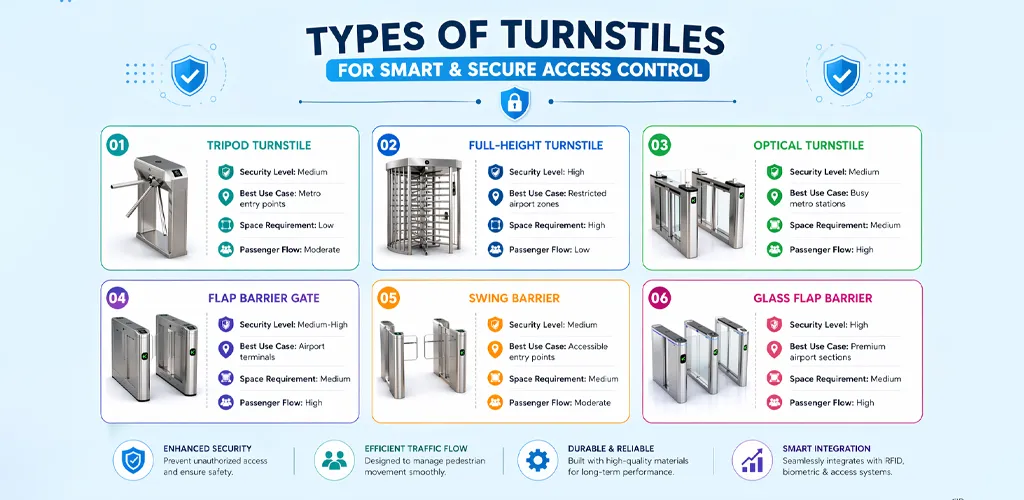
Tripod turnstiles are common in metro stations. Their three rotating arms allow single-person passage, ensuring controlled access in a compact space. These systems are ideal for moderate security needs, favoured by operators for their affordability and ease of maintenance. Indian manufacturers offer customised models with anti-tailgating features.
Full-Height Turnstiles
Full-height turnstiles extend from floor to ceiling and offer maximum security. These systems resemble revolving doors and prevent unauthorised entry from any angle. Airports often use them in restricted zones such as staff-only areas. High-security environments benefit from their ability to block forced entry. These structures also integrate well with advanced airport security gates.
Optical Turnstiles
Instead of physical barriers, optical turnstiles rely on sensors. These systems detect movement, allowing authorised individuals a quick passage. Metro networks with heavy passenger traffic often favour optical models, as they reduce waiting time and ensure smooth access control. Their sleek design also enhances the appearance of modern terminals.
What Are the Different Types of Flap Barriers?
Flap barriers are widely used in both airports and metro stations due to their speed and smart design. They provide a balance between security and passenger comfort.
Standard Flap Barrier Gate
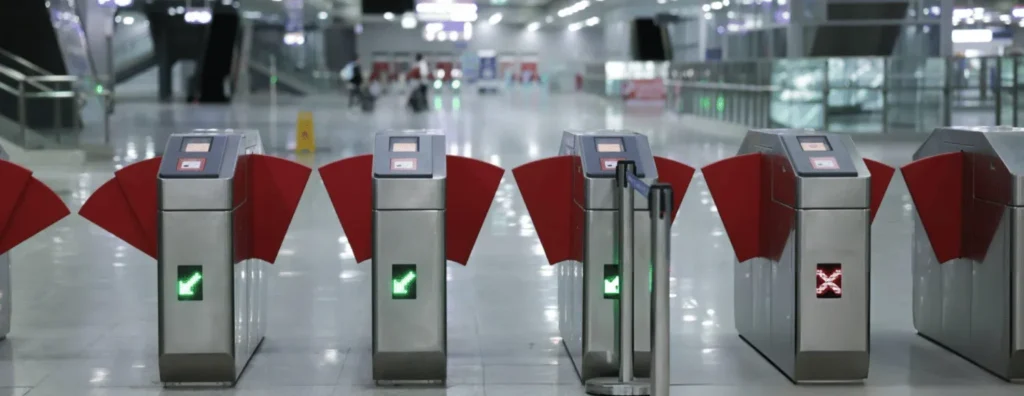
A flap barrier gate uses retractable panels that open when access is granted. These panels close immediately after a person passes through, preventing tailgating. This system works well in high-traffic metro stations. Operators rely on it for efficient pedestrian access control without creating bottlenecks.
Swing Barrier Systems
Swing barriers operate with doors that open sideways. These systems are ideal for passengers carrying luggage or using wheelchairs. Airports install them near check-in or boarding areas. They ensure accessibility while maintaining secure security gate operations.
For example, P-Type swing barriers work best in areas that require both accessibility and controlled entry. Airports benefit from their ability to manage passengers with luggage while maintaining security standards. Metro stations also use them at designated entry points. These systems complement other barrier gates for public transport by offering flexibility and ease of movement.
Glass Flap Barriers
Glass-based flap barriers combine aesthetics with functionality. Transparent panels provide a clean and modern look while maintaining control over entry points. Many international airports use them to enhance passenger experience. These systems also support biometric integration for faster authentication.
Comparison Table of Turnstiles and Flap Barriers
This table can help in selecting the most suitable access control solution for specific environments such as metro stations, airports, and restricted zones.
| Type | Security Level | Best Use Case | Space Requirement | Passenger Flow |
| Tripod Turnstile | Medium | Metro entry points | Low | Moderate |
| Full-Height Turnstile | High | Restricted airport zones | High | Low |
| Optical Turnstile | Medium | Busy metro stations | Medium | High |
| Flap Barrier Gate | Medium-High | Airport terminals | Medium | High |
| Swing Barrier | Medium | Accessible entry points | Medium | Moderate |
| Glass Flap Barrier | High | Premium airport sections | Medium | High |
How These Systems Support Modern Transit Infrastructure
Airports and metro stations require systems that adapt to growing passenger demand. Barrier gates for public transport now include smart features such as contactless access and real-time monitoring.
A trusted turnstile manufacturer in India often focuses on durability and technology integration. These systems must handle continuous usage without compromising safety. Modern installations also connect with centralised control systems. This approach allows authorities to monitor entry points and respond quickly to unusual activity.
What Are the Factors to Consider Before Choosing a Security Gate System?
- Passenger Volume: Busy metro stations require high-speed systems like optical models or a flap barrier gate. Lower traffic areas can rely on simpler solutions.
- Security Requirements: Airports demand higher levels of control. Full-height systems and advanced airport security gates provide stronger protection.
- Accessibility Needs: Transit hubs must accommodate all passengers. Swing barriers and wide lanes improve movement for travellers with luggage or mobility challenges.
- Integration Capabilities: Modern systems often include biometric integration. This feature allows faster verification and reduces dependency on manual checks.
Final Thoughts on Different Types of Turnstiles and Flap Barriers
Turnstiles and flap barriers continue to evolve with technology. Airports and metro stations now depend on systems that combine efficiency with reliability. A well-chosen flap barrier gate improves passenger experience while maintaining safety.
At Hom Automation Pvt Ltd, we offer P-type swing barriers, flap barriers, full-height turnstiles, and tripod turnstiles for airports and metro stations. Our systems support controlled entry, smooth passenger movement, and practical access management across areas with different security and traffic requirements.
Frequently Asked Questions
What Is the Difference Between a Turnstile and a Flap Barrier?
A turnstile uses rotating arms or barriers to control entry. A flap barrier turnstile uses retractable panels that open and close automatically. Flap systems offer faster movement and a more modern design.
Which Type of Turnstile Is Best for Airport Security?
Full-height turnstiles provide the highest level of security. Airports also combine them with advanced security gates for layered protection.
Are Full-Height Turnstiles Necessary for High-Security Areas?
High-risk zones like airports and metro stations can benefit from full-height systems because they prevent unauthorised access completely. These installations remain essential in restricted airport sections.