

Crash Rated Boom Barrier
At HOM Automation, we manufacture and supply crash rated boom barriers designed for high-security vehicle access control at critical entry points across India. These heavy-duty barriers provide an additional physical security layer for locations where standard boom barriers may not provide the required level of vehicle restriction.
Our range includes hydraulic blocking bars, hydraulic CRB 24, and Dual Steel Arm Barriers. Built using structural steel and hydraulic drive systems, these solutions are designed for controlled vehicle access, reliable operation, and integration with modern access-control systems. HOM Automation manufactures its security systems in India and supports OEM, ODM, installation, and service requirements. Contact us today!
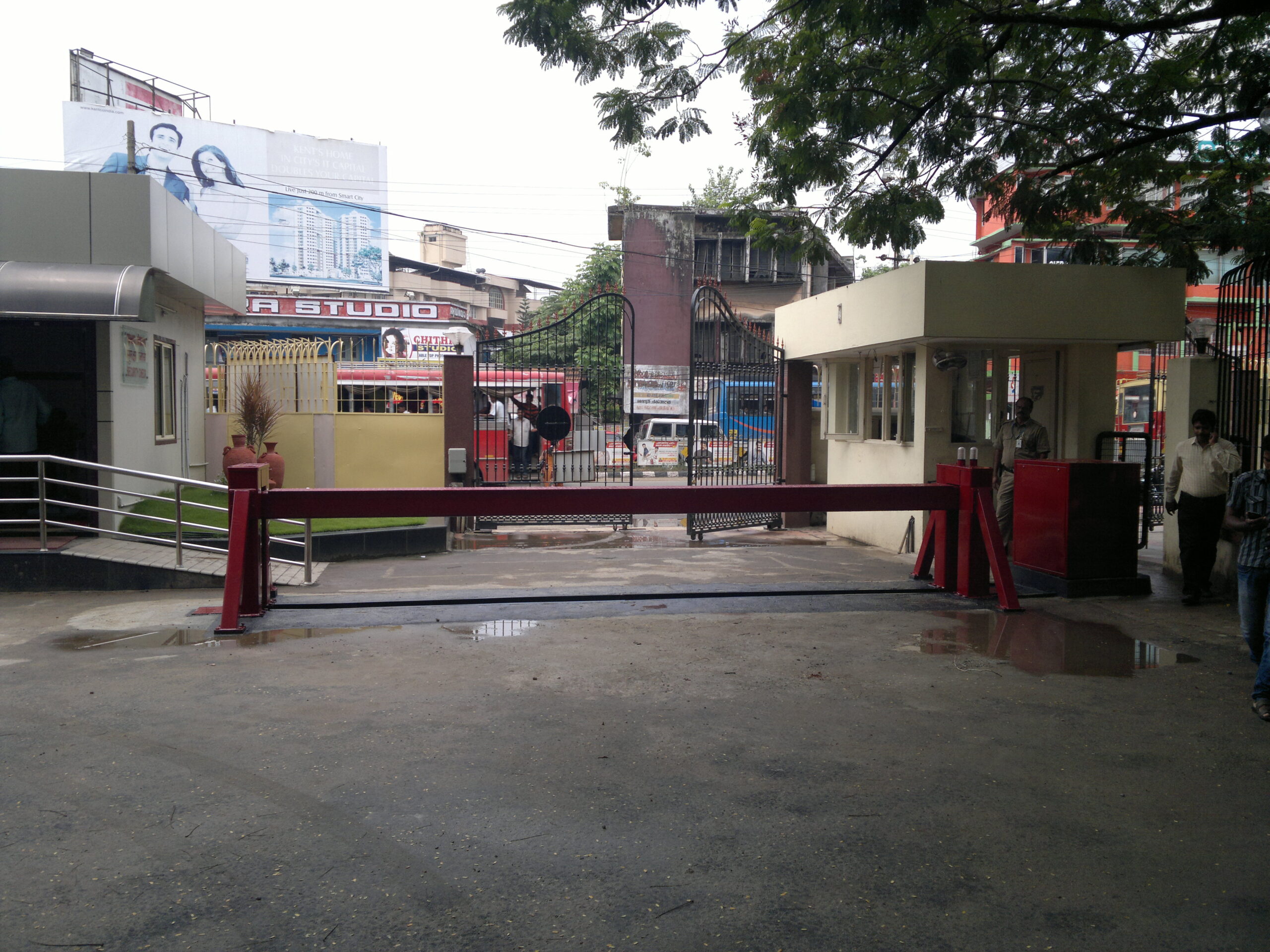
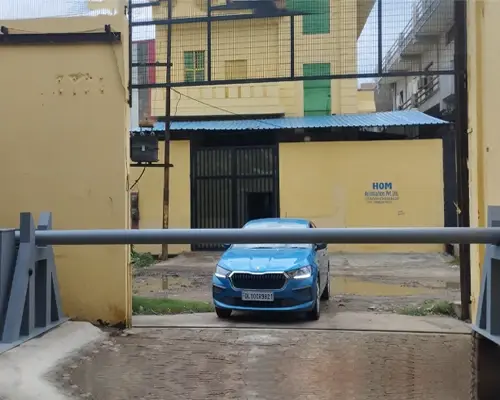

Types of Crash Rated Boom Barriers Explained
Hydraulic Blocking Bar
The Hydraulic Blocking Bar is a heavy-duty vehicle access-control solution designed for locations where stronger physical vehicle restriction is required than a conventional automatic boom barrier can provide. It uses structural steel construction and hydraulic operation for controlled barrier movement.
HOM’s Hydraulic Blocking Bar has been simulation-assessed against internationally recognised vehicle-impact methodologies, including ISO IWA 14-2:2013, BSI PAS 68:2013, and ASTM F2656. The applicable technical documentation should be reviewed for the specific project configuration before specifying a crash rating.
Hydraulic CRB 24
The Hydraulic CRB 24 is a heavy-duty hydraulic vehicle barrier, part of HOM’s range of K4 crash rated boom barriers, designed around K4 crash-performance parameters. It is intended for high-security access points where controlled vehicle movement and additional physical protection are required.
The system can be integrated with access-control infrastructure such as RFID-UHF, ANPR, loop detectors, photocells, remote controls, push buttons, and other compatible systems, depending on the selected configuration.
Dual Steel Arm Barriers
Dual Steel Arm Barriers use two steel arms to provide controlled vehicle access at entry points requiring a robust barrier configuration. Their structural design makes them suitable for demanding vehicle access-control environments where reliable operation and integration with existing security infrastructure, such as hydraulic bollards or a spike tyre killer, are important.
Crash Rated Boom Barriers: Meaning, Importance & Security Benefits
Crash rated boom barriers are designed for applications where a stronger physical vehicle barrier is required than a conventional access-control boom barrier. They can provide an additional security layer at critical entry points where vehicle restriction is an important part of the site’s overall security strategy.
HOM’s crash rated boom barrier solutions are designed for high-security vehicle access control and can integrate with modern access-control ecosystems. Depending on the model and configuration, these systems can support RFID-UHF, ANPR, loop detectors, photocells, biometric systems, push buttons, remote controls, and third-party access-control APIs.
Crash performance depends on the complete barrier system, foundation, installation configuration, vehicle characteristics, and applicable testing or engineering methodology. The appropriate technical documentation should therefore be reviewed for each project before specifying a particular crash rating.
Compare Crash Rated Boom Barrier Solutions
Product Type | Primary Application | Main Advantage | Best Suited For |
Hydraulic Blocking Bar | High-security vehicle access control | Heavy-duty physical vehicle restriction | Defence, government and critical infrastructure |
Hydraulic CRB 24 | Crash-rated vehicle access control | Designed around K4 crash-performance parameters | High-security and restricted-access facilities |
Dual Steel Arm Barriers | Controlled vehicle entry | Robust dual-arm configuration | Commercial, industrial and controlled entrances |
Key Features of HOM Crash Rated Boom Barriers
A crash rated barrier should be selected based on the site’s threat assessment and the applicable tested or engineered configuration rather than simply choosing a higher-rated product.
- Heavy-Duty Structural Steel Construction: Designed for demanding vehicle access-control environments.
- Hydraulic Operation: Hydraulic power units provide controlled boom movement and reliable operation.
- K4 Performance Parameters: Selected HOM models are designed around K4 crash-impact parameters.
- Dual Locking Supports: Available on HOM’s Hydraulic Blocking Bar and CRB 24 configurations for additional barrier stability.
- Fast Deployment: HOM’s current product specifications indicate approximately 6–8 second operation, depending on the model and operating conditions.
- Access-Control Integration: Supports RFID-UHF, ANPR, remote controls, push buttons, biometric systems, loop detectors, photocells, and third-party access-control APIs, depending on configuration.
- Indian Manufacturing: HOM manufactures its systems at its own facilities in Ghaziabad, Uttar Pradesh.
Where Are Crash Rated Boom Barriers Used?
Crash rated boom barriers are suitable for entry points where vehicle access needs to be tightly controlled and additional physical protection is required.
Defence and Military Facilities
Used at controlled entrances to military bases, strategic installations, and other restricted facilities.
Government Buildings and Embassies
Suitable for ministries, government compounds, diplomatic facilities, and other sensitive sites requiring controlled vehicle access. HOM specifically lists government facilities, embassies, parliament, courts, and defence installations among its application environments.
Industrial and Critical Infrastructure
Useful for refineries, power plants, manufacturing facilities, ports, and data centres where perimeter security is a key operational requirement.
Corporate and Commercial Campuses
Can be installed at controlled vehicle lanes, service entrances, logistics areas, and other access points requiring stronger physical vehicle restriction.
Airports and Transport Facilities
Suitable for controlled perimeter and vehicle-access areas where traffic management needs to work alongside existing security systems.
How to Choose a Crash Rated Boom Barrier
Before selecting a crash rated boom barrier, consider:
- Threat level: Determine whether the site requires conventional vehicle control or crash-resistant protection.
- Vehicle type and speed: Identify the vehicle classes and potential impact conditions that the barrier must address.
- Required crash-performance standard: Verify the applicable rating, test method, and supporting documentation for the selected configuration.
- Traffic volume: Select an operating system capable of handling the expected number of vehicle movements.
- Civil requirements: Review foundation dimensions, underground utilities, drainage, and available installation space before installation.
- Access-control integration: Check compatibility with RFID, ANPR, loop detectors, photocells, biometric systems, and existing security infrastructure.
- Emergency operation: Confirm manual override or power-failure provisions where required.
- Maintenance and service: Consider spare-parts availability, service support, and long-term operating requirements.
Why Choose HOM Automation for Crash-Rated Boom Barriers?
When a barrier is the last line of defence between an approaching vehicle and a restricted building, experience matters more than a specification sheet. HOM Automation has been designing and manufacturing vehicle security systems in India since 1993, and our crash-rated boom barriers guard entrances at banks, defence establishments, and five-star hotels across the country.
30+ Years of Manufacturing Experience
Three decades of building barriers have shown us what actually fails on site, from overworked hydraulics to poorly planned foundations. Every Hydraulic Blocking Bar, Hydraulic CRB 24, and Dual Steel Arm Barrier we build carries those lessons.
Proven at High-Security Installations
Our crash barriers are already in service at sites such as the Reserve Bank of India in multiple states and our crash-resistant steel arm barriers protect the entrance at Hyatt Regency, New Delhi. Our wider client base includes Western Air Command Subroto Park, the Indian Coast Guard, NTPC, Indian Oil and RBI offices across India.
Assessed Against Recognised Standards
Our Hydraulic Blocking Bar has been simulation-assessed against ISO IWA 14-2:2013, BSI PAS 68:2013 and ASTM F2656, and the CRB 24 is designed around K4 crash-performance parameters. We share the technical documentation for your exact configuration before you specify a rating, so your consultant knows exactly what they are approving.
In-House Manufacturing, Built for Export
Steel structures, hydraulic drive units, and controller cards are all made in our three factories in Ghaziabad using CNC turret punching, CNC bending, and MIG welding. That means factory-direct pricing, OEM/ODM options, and shipping by sea or air for projects outside India.
After-Sales Support You Can Count On
Every barrier is backed by warranty and AMC options, a designed service life of 15 years, and lifetime support. Manual hand-pump operation keeps the gate usable during power failures, and spares come straight from the factory that made your barrier.
Trusted by RBI, SBI, Indian Oil, NTPC, Western Air Command and hundreds of other organisations. View our complete clientele.
Frequently Asked Questions
A crash rated boom barrier is a heavy-duty vehicle barrier designed to provide controlled access while offering a specified level of resistance to vehicle impact. Its performance depends on the complete barrier system, including the structural components, foundation, installation configuration, and applicable testing or engineering criteria.
A K4 crash rated boom barrier is designed around K4 impact-performance parameters for heavy vehicle mitigation. HOM's Hydraulic Blocking Bar is described as having K4-equivalent impact performance based on simulation assessment against recognised impact methodologies, while the Hydraulic CRB 24 is built to K4 rating parameters.
A standard boom barrier primarily controls vehicle entry and exit. A crash rated boom barrier is designed for applications where the barrier must provide a stronger physical security layer and meet specified vehicle-impact performance requirements.
Operating speed varies by model and site configuration. HOM's current Hydraulic Blocking Bar and Hydraulic CRB 24 specifications indicate approximately 6-8 seconds for operation.
Yes. HOM's crash rated barrier systems support integration with ANPR, RFID-UHF, loop detectors, photocells, remote controls, push buttons, biometric systems, and third-party access-control APIs, depending on the selected model and configuration.
The available backup or manual-operation method depends on the specific barrier model. HOM's Hydraulic Blocking Bar and Hydraulic CRB 24 product information includes manual hand pump operation provisions for power-failure situations. The exact configuration should be confirmed during project specification.
They can be used at high-security vehicle entrances for defence and military facilities, government buildings, embassies, industrial plants, data centres, corporate parks, logistics facilities, and other restricted-access locations.