

Hydraulic Bollards & Road Blockers
Unauthorised vehicle access is a growing threat to sensitive sites, from corporate campuses to defence zones. Traditional barriers may not provide sufficient protection against forced vehicle entry or high traffic volumes. HOM Automation offers hydraulic bollards and hydraulic road blockers designed to secure entry points, regulate traffic, and protect high-risk areas. As one of the leading bollard manufacturers in India, we provide automated vehicle access-control solutions designed for strength, safety, and reliable operation.
Our product range includes hydraulic rising bollards, hydraulic road blockers, shallow mount road blockers, and hydraulic fencing gates. Depending on the application and required protection level, crash-rated bollard systems can provide an additional layer of hostile vehicle mitigation. Whether you need controlled access for a commercial property or heavy-duty perimeter protection, our systems can be configured to suit different site requirements and access-control environments.
Types of Hydraulic Bollards & Road Blockers Explained
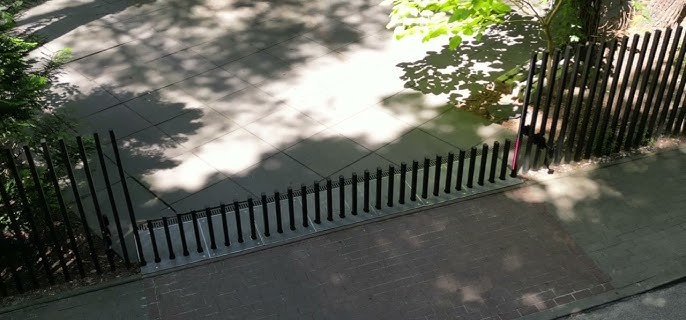
Hydraulic Fencing Gates
Hydraulic fencing gates provide controlled vehicle access while forming part of a wider perimeter security system. They can be integrated with access-control infrastructure to regulate authorised vehicle movement at restricted entrances and secure facility boundaries.
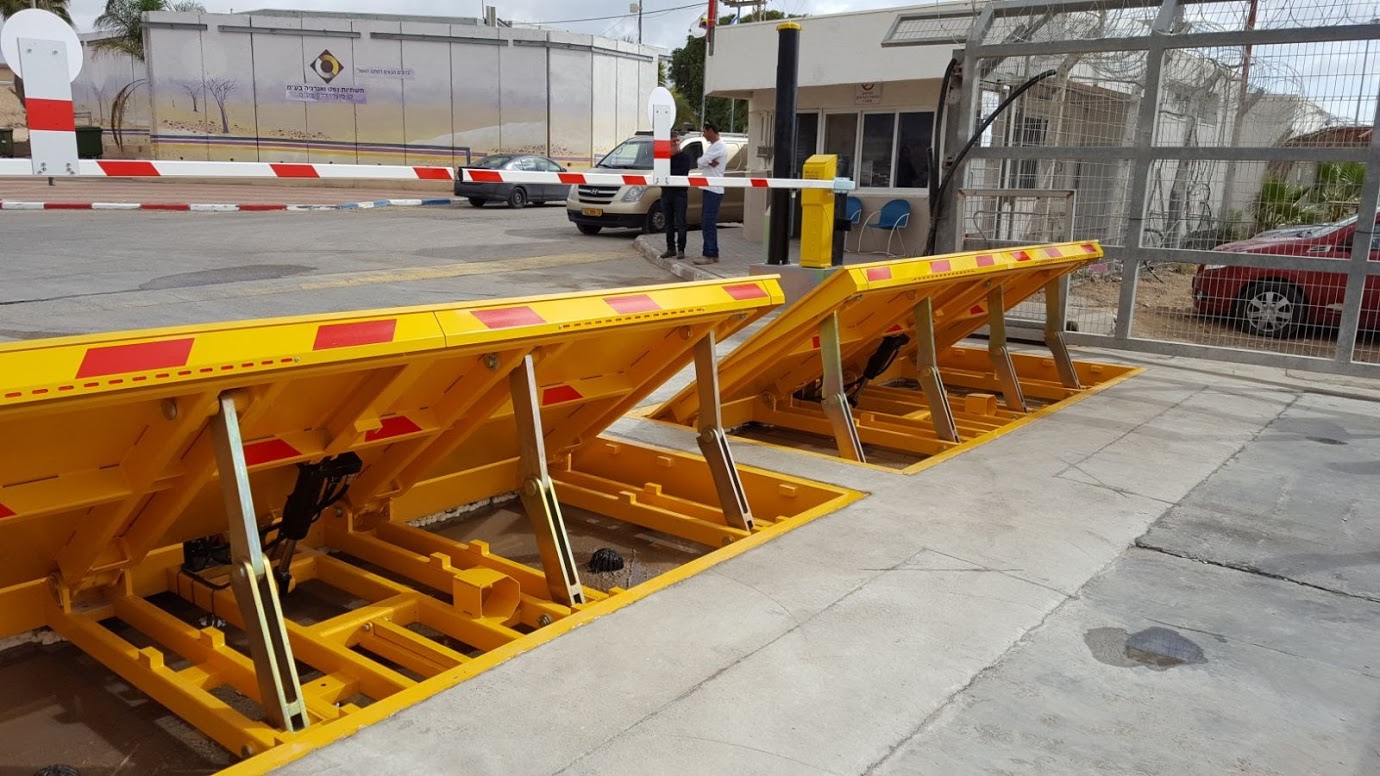
Shallow Mount Road Blockers
Shallow mount road blockers are designed for sites where conventional deep excavation may be difficult because of existing underground utilities, drainage constraints, or limited foundation depth. They provide a physical vehicle barrier while allowing installation in locations with specific civil and foundation requirements.
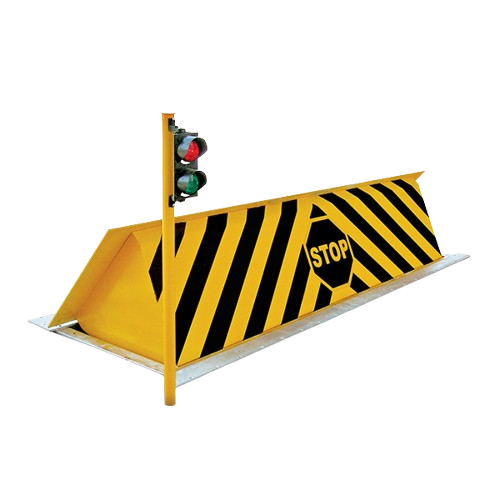
Hydraulic Road Blockers
Hydraulic road blockers serve as high-security ground barriers engineered to restrict vehicle incursions at critical perimeters. Unlike vertical posts, these heavy-duty rising plate barriers block the roadway and can be deployed at high-security locations such as military bases, data centres, and other restricted facilities. Integrated with hydraulic power units, they provide controlled vehicle access and can form part of an automated security lane.
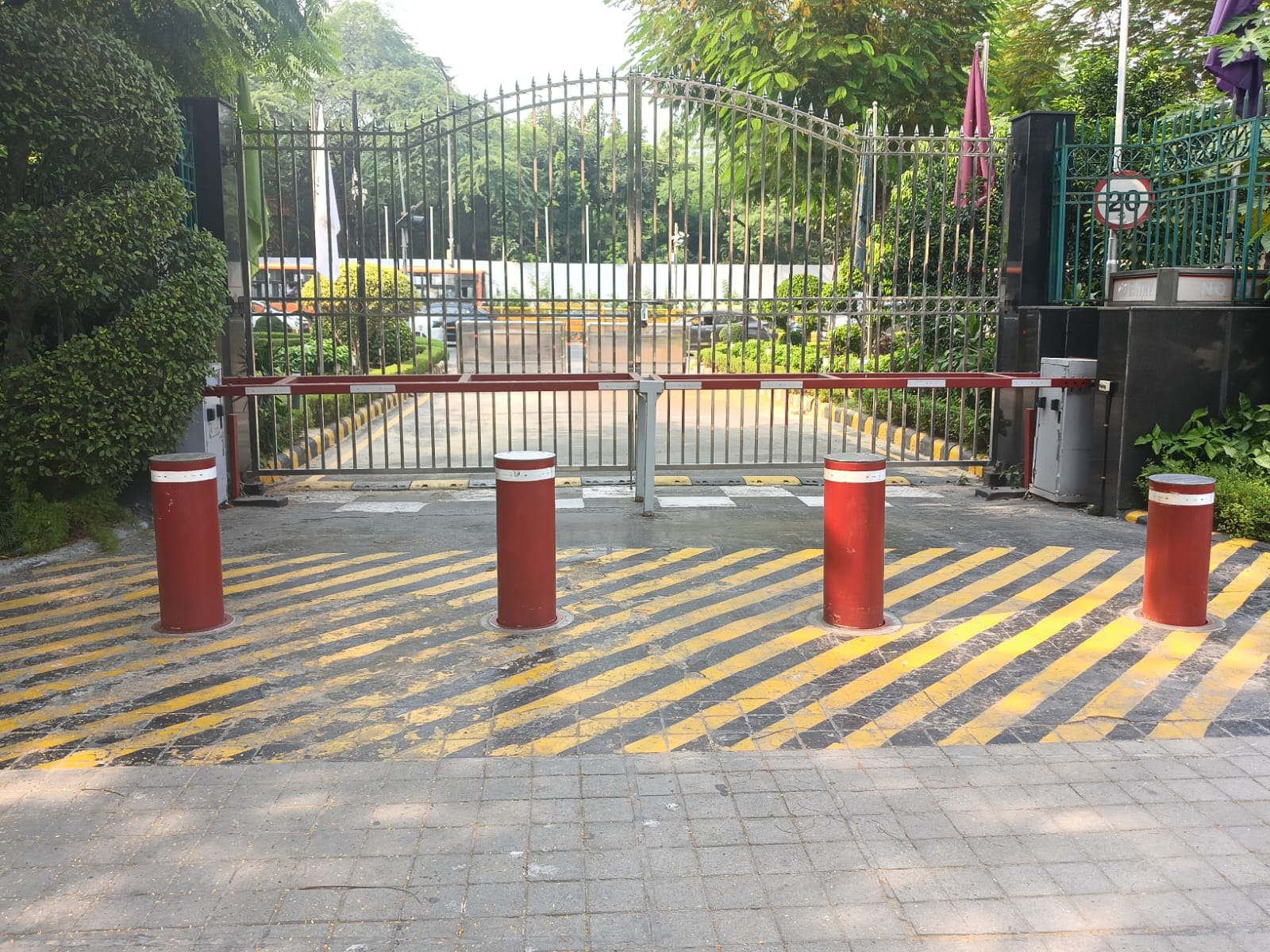
Hydraulic Rising Bollards
Hydraulic rising bollards are vertical vehicle barriers that rise from the ground to control access and retract when authorised vehicle movement is permitted. They are suitable for controlled entrances where physical vehicle restriction is required without permanently blocking the roadway.
Depending on the selected configuration, hydraulic bollards can be integrated with access-control systems to regulate vehicle entry at commercial properties, government facilities, industrial sites, and other restricted areas.
Understanding Hydraulic Bollards & Road Blockers & Why It Matters
As threats to physical security evolve, high-risk facilities require robust hostile vehicle mitigation (HVM) systems. Relying on standard manual gates or lightweight barriers may leave properties vulnerable to unauthorised vehicle incursions. Hydraulic bollards and heavy-duty hydraulic road blockers provide a physical security layer for protecting people, property, and sensitive assets.
HOM Automation engineers high-performance perimeter security solutions that integrate with modern access-control ecosystems. From automated corporate entries to high-security government facilities, these systems help regulate vehicle traffic while supporting authorised access. The appropriate vehicle barrier depends on the site’s security requirements, traffic conditions, installation constraints, and required level of physical protection.
Compare Hydraulic Bollard & Road Blocker Solutions
Product Type | Primary Application | Main Advantage | Best Suited For |
Hydraulic Fencing Gates | Controlled vehicle and perimeter access | Combines vehicle access control with perimeter security | Restricted facilities and secured entrances |
Shallow Mount Road Blockers | High-security vehicle access | Suitable where shallow foundation installation is required | Sites with civil or underground constraints |
Hydraulic Road Blockers | High-security vehicle restriction | Heavy-duty physical vehicle barrier | Defence, government and critical infrastructure |
Hydraulic Rising Bollards | Controlled vehicle access | Vertical physical access restriction | Commercial, industrial and restricted-access sites |
Key Features & Operational Benefits of Hydraulic Bollards & Road Blockers
Hydraulic vehicle barriers provide several operational and security benefits:
- Vehicle Access Control: Hydraulic bollards and road blockers help restrict unauthorised vehicle movement at controlled entry points.
- Physical Perimeter Protection: Heavy-duty barriers provide an additional physical security layer at sensitive facilities.
- Access-Control Integration: Systems can integrate with RFID readers, loop detectors, ANPR cameras, manual override controls, and other access-control equipment, depending on the configuration.
- Flexible Installation: Different configurations, including shallow mount systems, allow vehicle barriers to be selected according to site-specific civil and foundation requirements.
- Durability and Reliability: Hydraulic systems and robust structural components are designed for demanding vehicle access-control environments.
- Traffic Management: Automated deployment helps regulate authorised vehicle movement while maintaining controlled entry and exit.
Where Are Hydraulic Bollards & Road Blockers Used?
Hydraulic bollards and road blockers can be used across facilities where vehicle access needs to be controlled and perimeter security is important.
- Government and Defence Facilities: High-security vehicle barriers can help secure restricted entrances and control authorised vehicle movement.
- Industrial Facilities: Road blockers and bollards can strengthen perimeter security at manufacturing plants, refineries, power facilities, and other industrial sites.
- Corporate Campuses: Hydraulic bollards can regulate vehicle access at office campuses, service entrances, and controlled parking areas.
- Banks and Financial Institutions: Vehicle barriers can help secure controlled entrances, parking areas, loading zones, and other sensitive locations.
- Data Centres and Critical Infrastructure: Heavy-duty road blockers can provide an additional physical security layer at high-risk vehicle access points.
- Commercial and Public Facilities: Bollards can help control vehicle movement at hotels, commercial properties, and other facilities requiring restricted vehicle access.
How to Choose the Right Hydraulic Bollard or Road Blocker
Selecting the appropriate vehicle barrier depends on your facility’s security requirements, traffic volume, site layout, and installation conditions:
- Hydraulic Rising Bollards: Ideal where vertical vehicle restriction is required at controlled entrances and the roadway needs to remain open when access is authorised.
- Hydraulic Road Blockers: Best where stronger physical vehicle restriction is required at high-security or critical infrastructure sites.
- Shallow Mount Road Blockers: Recommended where conventional deep excavation is restricted by underground utilities, drainage, or foundation limitations.
- Hydraulic Fencing Gates: Suitable where vehicle access control needs to work alongside a secured perimeter or fencing system.
- Security Requirements: Consider the required level of vehicle protection and whether crash-rated equipment is necessary for the site.
- Site Conditions: Evaluate available foundation depth, drainage, underground utilities, roadway configuration, and installation space.
- Integration Requirements: Check compatibility with existing RFID, ANPR, loop detectors, access-control systems, and emergency controls.
Frequently Asked Questions
Hydraulic bollards are used to control vehicle access and protect restricted areas. They rise from the ground to block vehicle passage and retract when authorised access is permitted. They can be used at airports, hotels, government facilities, commercial properties, and industrial sites.
Hydraulic bollards use a hydraulic power unit to raise and lower the bollard. Depending on the system configuration, operation can be controlled through access-control devices such as RFID readers, push buttons, remote controls, or other authorised control systems.
Hydraulic bollards are slim posts that move vertically, while hydraulic road blockers are larger barriers with higher crash resistance. Hydraulic security bollards are ideal for urban or aesthetic settings, whereas road blockers are better for high-threat zones such as defence bases or data centres.
Yes, we offer customisation based on site layout, traffic volume, and security level. As a leading manufacturer, we offer bollard options for finishes, control systems, and installation depths. Our team will recommend the right solution after assessing your site.
Hydraulic security bollards can be specified with corrosion-resistant finishes and sealed components for outdoor environments. The appropriate configuration depends on the site's climate, exposure, drainage, and installation conditions.
Hydraulic bollards and road blockers require periodic inspection of the hydraulic system, moving components, control equipment, safety sensors, and drainage or foundation areas. Maintenance intervals depend on the equipment, operating frequency, and site conditions. Following the manufacturer's maintenance schedule helps support reliable long-term operation.